
Chicken Crossy – Real Money Arcade Crash Game in Canada
Chicken Crossy is a quick arcade-style casino game where you guide a chicken across traffic lanes, watch the payout climb as you progress, and choose the exact moment to cash out before a crash wipes the round. This guide breaks down how Chicken Crossy works for Canadian players, what to expect when playing for real money in CAD ($), how difficulty levels change the risk, how multipliers and cash-outs are calculated, and how to try the demo version before betting.
Where Canadian Players Can Play Chicken Crossy for Real Money
Picking the right casino is just as important as learning the rules of Chicken Crossy. Not every online gambling site carries this arcade-crash format, and the available limits, loading speed, and cash-out options can differ from one operator to another.
For players in Canada, the smoothest experience usually comes from platforms that support CAD ($), display clear game rules, and let you switch between demo and real-money play without confusing restrictions or unnecessary steps.
What to Look for in a Chicken Crossy Casino in Canada
A reliable platform should meet the following criteria:
- Available to players in Canada, with no sudden geo-blocks or forced redirects
- Support for CAD ($) deposits and withdrawals (or simple CAD-friendly banking)
- Clear limits, including minimum stake, maximum bet, and any win cap per round
- Demo mode access, so you can practise lanes and cash-out timing first
- Trusted payment options, such as Interac, cards, and popular e-wallets
- Browser-based play, with fast loading on desktop and mobile
- Transparent terms, without hidden bonus rules that block withdrawals
When you choose a casino that ticks these boxes, Chicken Crossy tends to run smoothly, the controls feel responsive, and you can focus on the only thing that matters: whether to cross one more lane or take the cash-out.
Chicken Crossy – Key Facts & Quick Overview
What Is Chicken Crossy?
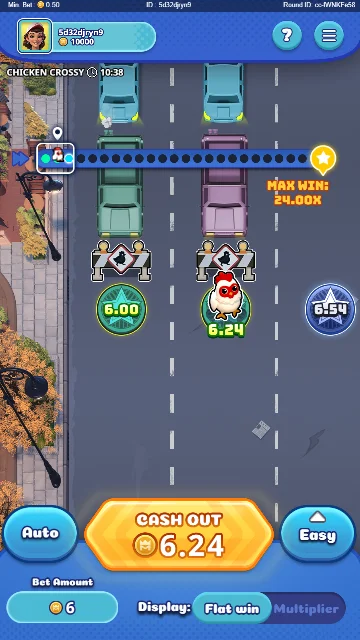
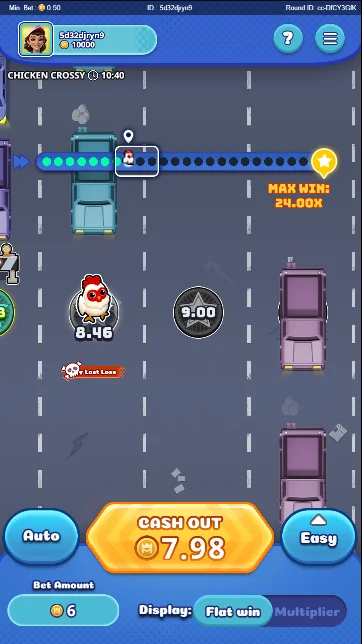
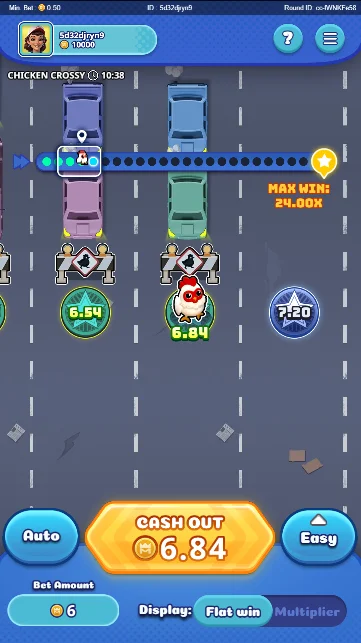
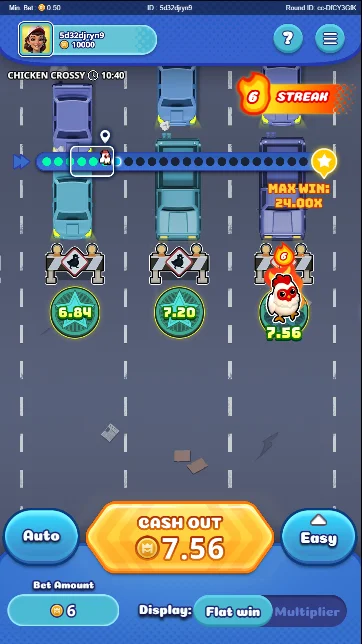

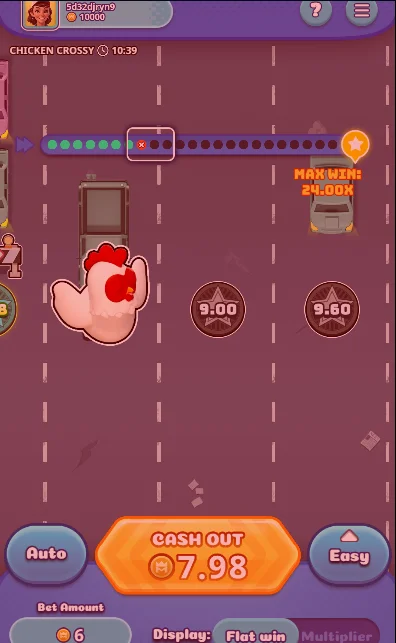
Chicken Crossy is an arcade-style crash game that replaces reels and paylines with one simple question: do you cross one more lane or take the money now? You start with a bet, watch the payout options on the lanes, and move the chicken forward step by step while traffic threatens to end the run instantly.
The hook is the risk ladder. Every lane you survive can improve your payout, but a single bad step ends the round and loses the stake. That creates the classic crash-game tension: small, quick wins are easier to secure, while bigger multipliers demand stronger nerves and a willingness to reset after losses.
Chicken Crossy is designed for fast sessions. The interface is clean, rounds resolve quickly, and the cash-out decision is always front and centre. Difficulty modes don’t change the goal — they change how aggressive the payout range is, and how punishing the game can feel when you push deeper into the lanes.
What makes Chicken Crossy stand out is how visible the choice feels. You can play conservatively and cash out early, or chase higher lanes for a rare spike. Either way, the round ends only when you decide to cash out or the traffic catches you.
For Canadian players, Chicken Crossy is typically available in-browser, works well on mobile, and can be played for real money in CAD ($) on casinos that support Canadian-friendly banking.
How Chicken Crossy Works
Chicken Crossy is built on a simple risk-and-reward loop: every safe lane improves your payout, but the next move can wipe the round. There are no bonus rounds, no paylines, and no long animations — just quick decisions, visible payouts, and a cash-out button that ends the run on your terms.
Lane-Based Rounds
Each round starts after you set your stake and hit Start. Your chicken begins at the roadside, and the lanes show payout values or multipliers (depending on your display setting). Your goal is to cross lanes safely and stop whenever you’re happy with the current return.
Payout Growth
As you progress, the potential payout increases. Easy mode stays within a smaller range, while higher difficulties compress value into riskier lanes and can jump to much larger numbers. The trade-off is simple: faster growth comes with harsher round endings.
Cash-Out Control
You can cash out during a successful run to lock in the current payout and end the round. If you choose to keep crossing lanes instead, the stake stays fully exposed. There’s no partial win and no safety buffer — the cash-out decision is the only way to secure a result.
Risk and Round End
If traffic catches the chicken, the round ends immediately and the bet is lost. Outcomes can swing quickly, especially in Hard and Ace modes, where big payouts exist but failed runs are common. That’s the point of the game: short, sharp rounds with high tension.
Fair Play and Randomness
Chicken Crossy is a chance-based casino game, so the key factor is the platform you choose. Reputable casinos publish game rules, apply consistent limits, and use certified RNG systems for casino titles. If fairness details aren’t available, that’s usually a sign to pick a different operator.
Difficulty Levels & Risk System
Chicken Crossy lets you pick the risk level before each round. Difficulty doesn’t change the controls — it changes the payout range and how punishing the run can be when you push deeper into traffic. If you want calmer sessions, stay on lower modes. If you want rare, high spikes, you’ll be looking at the top tier.
The best part is flexibility: you can switch difficulty at any time between rounds and adjust your approach without learning a new game.
How Risk Really Works in Chicken Crossy
- Every lane you choose to cross is a new risk decision
- One successful run doesn’t “improve” the next one
- Higher difficulty concentrates payouts into fewer, harsher outcomes
- Cashing out is the only way to lock in a win
There isn’t a single best difficulty. The game is designed so you can switch styles instantly depending on your bankroll, your mood, and how wild you want the session to feel.
Multipliers, Payouts & Winning Potential
Chicken Crossy doesn’t pay fixed prizes like a slot. Your result depends on two things: how far you push through the lanes and when you choose to cash out. The payout is always visible on-screen, but the next move can end the round, so every extra lane is a trade-off.
How Payouts Are Built
- Each lane represents a higher payout point
- You can view values as flat win amounts or as multipliers
- Higher difficulties unlock much larger top ranges
- A cash-out ends the round immediately and secures the payout
In practice, this means:
- short pushes = smaller wins you can take more often
- deep pushes = bigger numbers, but more frequent busts
There’s no reliable pattern to follow and no safe lane guaranteed — the only “strategy” is choosing when to stop.
RTP and Volatility (Plain English)
- RTP can vary by build, platform, or operator
- Lower difficulties are designed to feel more stable
- Higher difficulties shift value into rarer, larger outcomes
What this means for players:
- expect swings, even in short sessions
- losing streaks are normal on Hard and Ace
- discipline matters more than “staying in the game”
Chicken Crossy is best treated as a volatility game, not a slow grind for steady profit.
Winning Potential and Limits
- Payout tables show very high top-end numbers on the Ace difficulty
- In real-money play, many casinos apply a maximum win cap per round
- Limits, bet sizes, and caps can differ by operator, even in CAD ($)
These caps don’t change how the lanes work, but they can limit extreme “jackpot-style” results. For most players, Chicken Crossy is about choosing smart cash-outs and enjoying the tension — not chasing the absolute maximum every round.
What This Means for Canadian Players
- Smaller cash-outs are easier to secure
- Big wins require accepting frequent resets
- Short sessions often feel better than marathon play
- Your best tool is the cash-out button, not “patience”
Once you understand how risk and payout ranges interact across difficulties, Chicken Crossy becomes much easier to enjoy without frustration.
How to Play Chicken Crossy – Step-by-Step Guide
Chicken Crossy is easy to pick up, even if you’ve never played a crash-style game before. Each round follows the same quick flow, and the only real skill is knowing when to stop before the lane you want becomes the lane that ends you.
One Important Rule to Remember
Chicken Crossy rewards smart exits, not stubborn runs. The longer you push, the higher the payout can look — and the easier it is to lose everything on the next lane. A good session is about choosing a cash-out point and sticking to it.
Key Features of Chicken Crossy
Chicken Crossy keeps things simple and sharp. Instead of piling on bonus rounds, it focuses on the core loop: lane progression, risk, and cash-out timing. The extra tools are mostly there to improve clarity and pace while you play.
Instant Cash-Out
You can end a successful run whenever you want by cashing out. That single button is the whole game: it lets you turn a good position into a win before the next lane has a chance to wipe the round.
Lane-Based Decision Play
Instead of spinning reels, you’re making quick, clear choices. Cross another lane and improve the payout, or stop and bank the result. The pace stays fast and every move has a direct consequence.
Four Difficulty Modes
Easy, Medium, Hard, and Ace give you different volatility profiles without changing the controls. Lower modes suit cautious play, while the top tiers are built for players who can handle streaks and want the biggest potential top end.
Flat Win or Multiplier Display
You can choose to view payouts as flat values or multipliers, depending on what feels clearer during a round. It’s a small setting, but it can make decision-making faster when things get tense.
Autoplay Options
Autoplay lets you set a number of rounds and define how many lanes to attempt before cashing out. It’s useful for short, repeatable sessions, but it doesn’t remove risk — it just automates the routine.
Mobile-Friendly, No Download
The game is built for quick rounds and works smoothly in a browser on both desktop and mobile. No app install is required, and the main controls are designed for fast taps and simple inputs.
Chicken Crossy Demo Mode
The Chicken Crossy demo lets you try the lanes with virtual credits instead of real money. It’s the easiest way to understand how each difficulty feels and how quickly payouts can swing before you play in CAD ($) on a casino.
Demo Mode Basics
- No real-money bets
- No downloads required
- Same lanes, controls, and difficulty options
- Runs directly in your browser
What the Demo Shows Clearly
- how lane payouts are displayed during a round,
- how cash-out timing changes your results,
- how Easy vs. Ace volatility feels in practice,
- how quickly a session can swing on higher risk modes.
What the Demo Does NOT Change
- the cash-out mechanics stay the same,
- difficulty options behave the same way,
- the round pace remains fast,
- risk is still all-or-nothing.
Who the Demo Is Best For
- new players learning the lane flow,
- anyone comparing Easy, Medium, Hard, and Ace,
- players testing their cash-out habits before betting CAD ($).
Playing Chicken Crossy on Mobile
Chicken Crossy works well on mobile and doesn’t require a dedicated app. The game loads in your browser, scales to smaller screens, and keeps the main buttons large enough for quick decisions during fast rounds.
Pros and Cons of Chicken Crossy
Chicken Crossy is designed around fast rounds and visible risk. That creates real strengths for players who like quick decisions, but it also means the game can feel unforgiving if you chase big payouts without a plan.
Pros
- Simple to learn with no complicated bonus rules
- Cash-out gives you control over every win
- Four difficulties to match different risk appetites
- Big top-end potential on Hard and Ace modes
- Demo mode available for practise
- Fast rounds with immediate outcomes
- Plays smoothly on mobile without downloads
- Helpful UI tools (display modes, trackers, autoplay)
Cons
- High volatility on Hard and Ace settings
- Losing streaks can happen quickly in short sessions
- No classic slot features like free spins or bonus rounds
- Not ideal for players who want slow, low-stress play
- Chasing huge payouts can drain a balance fast
Overall, Chicken Crossy is best for players who enjoy short sessions, fast decisions, and direct risk-versus-reward gameplay — not long, predictable grinds.
Tips for Playing Chicken Crossy Safely
Chicken Crossy can turn quickly, especially at higher difficulties. You can’t remove the risk, but you can make better decisions by keeping sessions structured and avoiding the most common “tilt” mistakes.
Keep Your Stakes Comfortable
Pick a bet size you can handle losing multiple times in a row. Volatility means streaks happen, and oversized bets turn normal variance into stress.
Start With Easy or Medium
Lower modes let you learn the rhythm of lane crossing and practise disciplined cash-outs. Jumping straight into Ace is the fastest way to burn a bankroll before you understand the pace.
Decide Your Exit Point Before You Start
Set a target (or a strict stop point) before the round begins. Changing your plan mid-run because the payout is climbing is how players talk themselves into unnecessary losses.
Don’t Chase After a Bust
Each round is independent. Increasing stakes to “get it back” doesn’t improve the odds — it just increases how much a normal losing streak costs.
Use the Demo for Reps
Practise different difficulties and cash-out timing with virtual credits. When you switch to real money in CAD ($), you’ll make calmer decisions because the controls already feel familiar.
Take Short Breaks
Because rounds are fast, it’s easy to click into a long streak. If you feel rushed or emotional, step away — a reset is often the best “strategy” you have.
Is Chicken Crossy Worth Playing?
Chicken Crossy is a casino game built around one clear decision: cash out now or risk another lane. It doesn’t hide behind complex features. What you see is what you get — quick rounds, visible payouts, and an all-or-nothing outcome if traffic catches you.
If you like short sessions and direct control, it delivers. The game loads quickly, plays smoothly on mobile and desktop, and the difficulty settings let you choose how intense you want the volatility to feel without changing the core rules.
On the other hand, Chicken Crossy isn’t built for slow, relaxed play. The higher modes can end rounds fast, and chasing massive numbers is more about entertainment than consistency. The best results come from discipline and realistic exit points.
In real terms, Chicken Crossy works well as a “quick-hit” game you dip into, rather than a long-session title. Used that way, it’s a clean, modern crash experience with a fun arcade theme.
For Canadian players who want a simple lane-crossing crash game with clear cash-out control and support for CAD ($), Chicken Crossy is a solid pick — as long as you respect the volatility and play responsibly.
Chicken Crossy FAQ

Ryan McAllister
Meet Ryan McAllister, a Canadian gamer and writer based in Ontario. He spends his days testing online casino games, carefully analyzing mechanics, RTP, bonuses, and player experience. After long play sessions, Ryan writes clear, honest reviews that help readers choose safe and entertaining casinos. He prefers casual workdays, good coffee, and late-night gaming sessions. Ryan combines curiosity, patience, and real gameplay data to explain complex games in simple, practical language. He values transparency, responsible play, and opinions above marketing hype.